From the New York Times bestselling author of War Letters and Behind the Lines, Andrew Carrollâs My Fellow Soldiers draws on a rich trove of both little-known and newly uncovered letters and diaries to create a marvelously vivid and moving account of the American experience in World War I, with General John Pershing featured prominently in the foreground.
Andrew Carrollâs intimate portrait of General Pershing, who led all of the American troops in Europe during World War I, is a revelation. Given a military force that on the eve of its entry into the war was downright primitive compared to the European combatants, the general surmounted enormous obstacles to build an army and ultimately command millions of U.S. soldiers. But Pershing himselfâoften perceived as a harsh, humorless, and wooden leaderâconcealed inner agony from those around him: almost two years before the United States entered the war, Pershing suffered a personal tragedy so catastrophic that he almost went insane with grief and remained haunted by the loss for the rest of his life, as private and previously unpublished letters he wrote to family members now reveal. Before leaving for Europe, Pershing also had a passionate romance with George Pattonâs sister, Anne. But once he was in France, Pershing fell madly in love with a young painter named Micheline Resco, whom he later married in secret.
Woven throughout Pershingâs story are the experiences of a remarkable group of American men and women, both the famous and unheralded, including Harry Truman, Douglas Macarthur, William âWild Billâ Donovan, Teddy Roosevelt, and his youngest son Quentin. The chorus of these voices, which begins with the first Americans who enlisted in the French Foreign Legion 1914 as well as those who flew with the Lafayette Escadrille, make the high stakes of this epic American saga piercingly real and demonstrates the warâs profound impact on the individuals who servedâduring and in the years after the conflictâwith extraordinary humanity and emotional force.
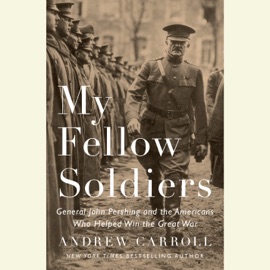
My Fellow Soldiers: General John Pershing and the Americans Who Helped Win the Great War (Unabridged) - Andrew Carroll
From the New York Times bestselling author of War Letters and Behind the Lines, Andrew Carrollâs My Fellow Soldiers draws on a rich trove of both little-known and newly uncovered letters and diaries to create a marvelously vivid and moving account of the American experience in World War I, with General John Pershing featured prominently in the foreground.
Andrew Carrollâs intimate portrait of General Pershing, who led all of the American troops in Europe during World War I, is a revelation. Given a military force that on the eve of its entry into the war was downright primitive compared to the European combatants, the general surmounted enormous obstacles to build an army and ultimately command millions of U.S. soldiers. But Pershing himselfâoften perceived as a harsh, humorless, and wooden leaderâconcealed inner agony from those around him: almost two years before the United States entered the war, Pershing suffered a personal tragedy so catastrophic that he almost went insane with grief and remained haunted by the loss for the rest of his life, as private and previously unpublished letters he wrote to family members now reveal. Before leaving for Europe, Pershing also had a passionate romance with George Pattonâs sister, Anne. But once he was in France, Pershing fell madly in love with a young painter named Micheline Resco, whom he later married in secret.
Woven throughout Pershingâs story are the experiences of a remarkable group of American men and women, both the famous and unheralded, including Harry Truman, Douglas Macarthur, William âWild Billâ Donovan, Teddy Roosevelt, and his youngest son Quentin. The chorus of these voices, which begins with the first Americans who enlisted in the French Foreign Legion 1914 as well as those who flew with the Lafayette Escadrille, make the high stakes of this epic American saga piercingly real and demonstrates the warâs profound impact on the individuals who servedâduring and in the years after the conflictâwith extraordinary humanity and emotional force.