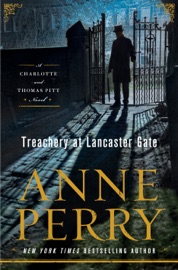
In this riveting new William Monk novel, Anne Perry delves into the diverse population of Victorian London, whose disparate communities force Monk to rethink his investigative techniquesâlest he be caught in the crosshairs of violent bigotry.
In the course of his tenure with the Thames River Police, Commander Monk has yet to see a more gruesome crime scene: a Hungarian warehouse owner lies in the middle of his blood-sodden office, pierced through the chest with a bayonet and eerily surrounded by seventeen candles, their wicks dipped in blood. Suspecting the murder may be rooted in ethnic prejudice, Monk turns to Londonâs Hungarian community in search of clues but finds his inquiries stymied by its wary citizens and a language he doesnât speak. Only with the help of a local pharmacist acting as translator can Monk hope to penetrate this tightly knit enclave, even as more of its members fall victim to identical brutal murders. But whoever the killer, or killers, may beâa secret society practicing ritual sacrifice, a madman on a spree, a British native targeting foreignersâthey are well hidden among the cityâs ever-growing populace.

â[Anne] Perry fashions a rich, if blood-spattered narrative from this chapter of history. As the murders [of Hungarians] continue, Monk and his clever wife, Hester . . . struggle to fathom the new climate of hatred. âI think itâs fear,â Hester says. âItâs fear of ideas, things that arenât the way youâre used to. Everyone you donât understand because their language is different, their food, but above all their religion.â How times havenât changed.ââThe New York Times Book Review
âSkillful . . . Perry smoothly intertwines themesâwarâs lingering cost, tension around immigration and othernessâthat challenge in both her period and our own.ââPublishers Weekly
In this riveting new William Monk novel, Anne Perry delves into the diverse population of Victorian London, whose disparate communities force Monk to rethink his investigative techniquesâlest he be caught in the crosshairs of violent bigotry.
In the course of his tenure with the Thames River Police, Commander Monk has yet to see a more gruesome crime scene: a Hungarian warehouse owner lies in the middle of his blood-sodden office, pierced through the chest with a bayonet and eerily surrounded by seventeen candles, their wicks dipped in blood. Suspecting the murder may be rooted in ethnic prejudice, Monk turns to Londonâs Hungarian community in search of clues but finds his inquiries stymied by its wary citizens and a language he doesnât speak. Only with the help of a local pharmacist acting as translator can Monk hope to penetrate this tightly knit enclave, even as more of its members fall victim to identical brutal murders. But whoever the killer, or killers, may beâa secret society practicing ritual sacrifice, a madman on a spree, a British native targeting foreignersâthey are well hidden among the cityâs ever-growing populace.
â[Anne] Perry fashions a rich, if blood-spattered narrative from this chapter of history. As the murders [of Hungarians] continue, Monk and his clever wife, Hester . . . struggle to fathom the new climate of hatred. âI think itâs fear,â Hester says. âItâs fear of ideas, things that arenât the way youâre used to. Everyone you donât understand because their language is different, their food, but above all their religion.â How times havenât changed.ââThe New York Times Book Review
âSkillful . . . Perry smoothly intertwines themesâwarâs lingering cost, tension around immigration and othernessâthat challenge in both her period and our own.ââPublishers Weekly