Alfred North Whitehead once said, âthe safest general characterization of the European philosophical tradition is that it consists of a series of footnotes to Plato.â
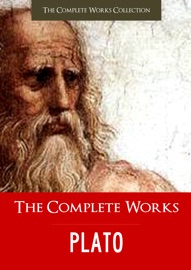
Itâs hard to overstate Platoâs influence on the Westâs philosophical heritage and its civilization. As the first philosopher whose works survived to the present day, his writings and ideas are often characterized as the starting point of Western philosophy. Nor was his influence confined to the modern form of philosophyâPlato also affected political, religious, and spiritual thinkers, including early Christian theologians.
Platoâs works are written as dramatic dialogues. His focus is often on following the argument itselfâthe âdialecticâârather than working toward a specific conclusion. His mentor, Socrates, is frequently the principal speaker, but scholars still debate whether Plato was expressing Socratesâ views or merely using Socrates as a mouthpiece for his own ideas.
In general, there are forty-five major works attributed to Plato, and all but one are dialogues. Modern scholars agree that roughly half of those were definitely written by him, some of those are definitely forgeries, and the rest theyâre still unsure about. In this translation Jowett includes all but one of the works that modern scholars agree are authentic, along with an appendix of selected spurious dialogues. Over time, opinion on which works attributed to Plato were definitely written by him has changed; the only work that modern scholars believe is authentic that Jowett doesnât include in this collection is âHippias Major.â
Alfred North Whitehead once said, âthe safest general characterization of the European philosophical tradition is that it consists of a series of footnotes to Plato.â
Itâs hard to overstate Platoâs influence on the Westâs philosophical heritage and its civilization. As the first philosopher whose works survived to the present day, his writings and ideas are often characterized as the starting point of Western philosophy. Nor was his influence confined to the modern form of philosophyâPlato also affected political, religious, and spiritual thinkers, including early Christian theologians.
Platoâs works are written as dramatic dialogues. His focus is often on following the argument itselfâthe âdialecticâârather than working toward a specific conclusion. His mentor, Socrates, is frequently the principal speaker, but scholars still debate whether Plato was expressing Socratesâ views or merely using Socrates as a mouthpiece for his own ideas.
In general, there are forty-five major works attributed to Plato, and all but one are dialogues. Modern scholars agree that roughly half of those were definitely written by him, some of those are definitely forgeries, and the rest theyâre still unsure about. In this translation Jowett includes all but one of the works that modern scholars agree are authentic, along with an appendix of selected spurious dialogues. Over time, opinion on which works attributed to Plato were definitely written by him has changed; the only work that modern scholars believe is authentic that Jowett doesnât include in this collection is âHippias Major.â