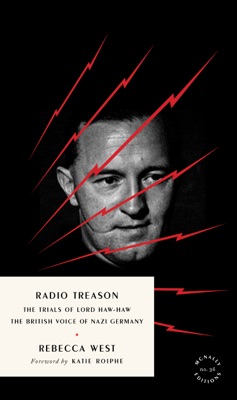
The gripping courtroom drama of a Brooklyn-born Englishman who became the voice of Nazi Germany, by âone of the most brilliant and erudite journalists of the centuryâ (The New York Times).
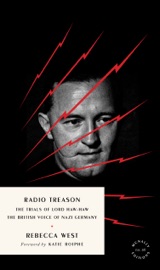
In 1945, The New Yorker commissioned star reporter Rebecca West to cover the London trial of William Joyce, who stood accused by the British government of aiding the Third Reich. Captured by British forces in Germany, Joyce was alleged to have hosted a radio program, Germany Calling, devoted to Nazi propaganda and calls for a British surrender.
The legal case against Joyce (known as âLord Haw-Hawâ for his supposedly posh accent) proved to be tenuous and full of uncertainties. Yet each new piece of evidence added to Westâs timeless portrait of a social reject who turned to the far right, who rose through the ranks without ever being liked, and who sought validation through a set of shared hatredsâof elites, of communists, and especially of Jews.
As a work of psychological suspense, Rebecca Westâs Radio Treason anticipates Truman Capote, Janet Malcolm, and Joan Didion at their best. As a study in political extremism, as Katie Roiphe writes in her foreword, âIt is as if Lord Haw-Haw has been transported from her time into ours.â
The gripping courtroom drama of a Brooklyn-born Englishman who became the voice of Nazi Germany, by âone of the most brilliant and erudite journalists of the centuryâ (The New York Times).
In 1945, The New Yorker commissioned star reporter Rebecca West to cover the London trial of William Joyce, who stood accused by the British government of aiding the Third Reich. Captured by British forces in Germany, Joyce was alleged to have hosted a radio program, Germany Calling, devoted to Nazi propaganda and calls for a British surrender.
The legal case against Joyce (known as âLord Haw-Hawâ for his supposedly posh accent) proved to be tenuous and full of uncertainties. Yet each new piece of evidence added to Westâs timeless portrait of a social reject who turned to the far right, who rose through the ranks without ever being liked, and who sought validation through a set of shared hatredsâof elites, of communists, and especially of Jews.
As a work of psychological suspense, Rebecca Westâs Radio Treason anticipates Truman Capote, Janet Malcolm, and Joan Didion at their best. As a study in political extremism, as Katie Roiphe writes in her foreword, âIt is as if Lord Haw-Haw has been transported from her time into ours.â