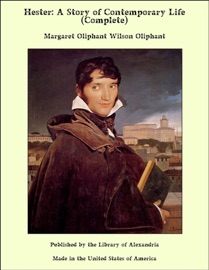
The bank owned by the Vernon family has a long and illustrious history in the town of Redboroughâuntil its chief, John Vernon, brings it to its knees through mismanagement. He flees the country, and his cousin, Catherine Vernon, meets the crisis as the other shareholder, and at the expense of her own personal fortune. Under her competent leadership, the bank regains its past glories, and she becomes a wealthy philanthropist.
As part of her largesse, Catherine provides for a number of her scattered relatives; after John Vernonâs death, she invites the impoverished widow to return to Redborough with her daughter, Hester. The first meeting of Catherine with Hester, still only fourteen, brings out an instinctive and mutual antipathy. Yet Hester longs to do something useful with her life, bold and even heroic, as Catherine had done. No such possibilities are open to her, however, and her life settles into a dull routine. This equilibrium is upset when one of Catherineâs ânon-Vernonâ relations arrives from London with his experience of life on the Stock Exchange. It is clear that this is as much Catherineâs storyâframed by the hard-nosed realism of the banking worldâas it is Hesterâs, even though the younger woman gives her name as title to the novel.


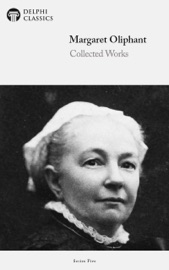
The depiction of Catherine Vernonâs hopes and fears, triumphs and tragedies, owes much to Margaret Oliphantâs own experiences. Oliphant was herself a competent manager with a huge capacity for work, but who had suffered much as a young woman. She understood, too, the challenges of providing for extended family, and the attractions and antipathies, as well as gratitude and resentment, that could grow between its members.
In Hester, this social observation gains an additional edge by the dynamics of sexual politics which run through the novel. In spite of Oliphantâs intelligence and abilitiesâoften thwarted, she thought, because she was a widowed womanâshe was unpersuaded by those arguing for womenâs suffrage: she wrote a critical review of John Stuart Millâs The Subjection of Women. Yet Hester remains equivocal about what prospects should be open to this intelligent and capable, yet frustrated young woman.
Hester has remained one of Oliphantâs most enduringly popular works.
The bank owned by the Vernon family has a long and illustrious history in the town of Redboroughâuntil its chief, John Vernon, brings it to its knees through mismanagement. He flees the country, and his cousin, Catherine Vernon, meets the crisis as the other shareholder, and at the expense of her own personal fortune. Under her competent leadership, the bank regains its past glories, and she becomes a wealthy philanthropist.
As part of her largesse, Catherine provides for a number of her scattered relatives; after John Vernonâs death, she invites the impoverished widow to return to Redborough with her daughter, Hester. The first meeting of Catherine with Hester, still only fourteen, brings out an instinctive and mutual antipathy. Yet Hester longs to do something useful with her life, bold and even heroic, as Catherine had done. No such possibilities are open to her, however, and her life settles into a dull routine. This equilibrium is upset when one of Catherineâs ânon-Vernonâ relations arrives from London with his experience of life on the Stock Exchange. It is clear that this is as much Catherineâs storyâframed by the hard-nosed realism of the banking worldâas it is Hesterâs, even though the younger woman gives her name as title to the novel.
The depiction of Catherine Vernonâs hopes and fears, triumphs and tragedies, owes much to Margaret Oliphantâs own experiences. Oliphant was herself a competent manager with a huge capacity for work, but who had suffered much as a young woman. She understood, too, the challenges of providing for extended family, and the attractions and antipathies, as well as gratitude and resentment, that could grow between its members.
In Hester, this social observation gains an additional edge by the dynamics of sexual politics which run through the novel. In spite of Oliphantâs intelligence and abilitiesâoften thwarted, she thought, because she was a widowed womanâshe was unpersuaded by those arguing for womenâs suffrage: she wrote a critical review of John Stuart Millâs The Subjection of Women. Yet Hester remains equivocal about what prospects should be open to this intelligent and capable, yet frustrated young woman.
Hester has remained one of Oliphantâs most enduringly popular works.