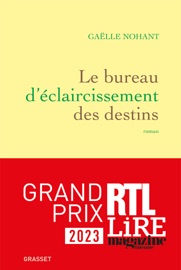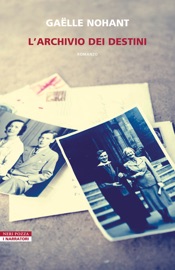
In the tradition of The Lost and The Postcard, a powerful novel of loss and restitution in and after wartime, like a detective novel in reverse.
When young French woman marries and moves to her German husbandâs small hometown, Bad Arolsen, she finds a world where no one discusses what the locals did during the war. She has no idea that her life will be changed forever when she accepts a job at the secretive International Tracing Serviceâfounded by the Allies at the end of WWII to help trace the fates of millions of wartime dead and displaced. Meticulous and conscientious, Irene quickly becomes obsessed with her workâat the cost of her personal life.
Years later, she is entrusted with returning thousands of confiscated objects, recovered from the liberated camps. IrĂšne pieces together the identity of each object's rightful owner, in order to give the descendants of the victims something to remember their lost relatives by. A faded cloth doll, a medallion, an embroidered handkerchief . . . every object contains its secrets. During her research, IrĂšne meets people who will inspire and guide her from Lublin to Warsaw, from Berlin to Paris, to discover a past that concerns her personally. In so doing, she glimpses humanityâat its worst, but also, its bestâand looking for the dead, she finds the living.
Weaving together the trajectories of these individual lives with the collective memory of Europe, this devastatingly beautiful novel is suffused with wisdom and compassion.
In the tradition of The Lost and The Postcard, a powerful novel of loss and restitution in and after wartime, like a detective novel in reverse.
When young French woman marries and moves to her German husbandâs small hometown, Bad Arolsen, she finds a world where no one discusses what the locals did during the war. She has no idea that her life will be changed forever when she accepts a job at the secretive International Tracing Serviceâfounded by the Allies at the end of WWII to help trace the fates of millions of wartime dead and displaced. Meticulous and conscientious, Irene quickly becomes obsessed with her workâat the cost of her personal life.
Years later, she is entrusted with returning thousands of confiscated objects, recovered from the liberated camps. IrĂšne pieces together the identity of each object's rightful owner, in order to give the descendants of the victims something to remember their lost relatives by. A faded cloth doll, a medallion, an embroidered handkerchief . . . every object contains its secrets. During her research, IrĂšne meets people who will inspire and guide her from Lublin to Warsaw, from Berlin to Paris, to discover a past that concerns her personally. In so doing, she glimpses humanityâat its worst, but also, its bestâand looking for the dead, she finds the living.
Weaving together the trajectories of these individual lives with the collective memory of Europe, this devastatingly beautiful novel is suffused with wisdom and compassion.