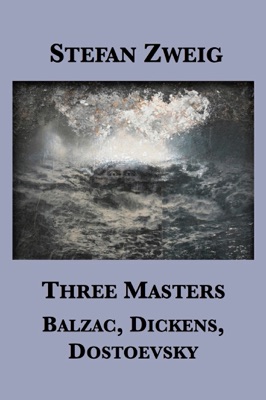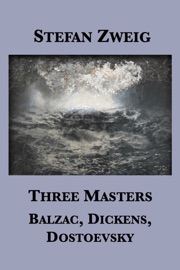
In these early 20th century literary essays, Stefan Zweig offers a Central European view of the writers he believed to be the âthree greatest novelistsâ of the 19th century: Balzac, Dickens, and Dostoevsky.
In Zweigâs view, Balzac set out to emulate his childhood hero Napoleon. Writing 20 hours a day, Balzacâs literary ambition was âtantamount to monomania in its persistence, its intensity, and its concentration.â His characters, each similarly driven by one desperate urge, were more vital to Balzac than people in his daily life.
In Zweigâs reading, Dickens embodied Victorian England and its âbourgeois smugnessâ. His characters aspire to âA few hundred pounds a year, an amiable wife, a dozen children, a well-appointed table and succulent meats to entertain their friends with, a cottage not too far from London, the windows giving a view over the green countryside, a pretty little garden, and a modicum of happiness.â The ideal of middle-class respectability suffuses Dickensâ fiction.
Dostoevsky drew on the struggles of his own life to illuminate the contradictions of the human soul. In Zweigâs view, his heroes had no desire to be citizens or ordinary human beings. While Balzacâs heroes âwould gladly have subjugated the world, Dostoevskyâs heroes wished to transcend it.â
Three Masters: Balzac, Dickens, Dostoevsky - Stefan Zweig
In these early 20th century literary essays, Stefan Zweig offers a Central European view of the writers he believed to be the âthree greatest novelistsâ of the 19th century: Balzac, Dickens, and Dostoevsky.
In Zweigâs view, Balzac set out to emulate his childhood hero Napoleon. Writing 20 hours a day, Balzacâs literary ambition was âtantamount to monomania in its persistence, its intensity, and its concentration.â His characters, each similarly driven by one desperate urge, were more vital to Balzac than people in his daily life.
In Zweigâs reading, Dickens embodied Victorian England and its âbourgeois smugnessâ. His characters aspire to âA few hundred pounds a year, an amiable wife, a dozen children, a well-appointed table and succulent meats to entertain their friends with, a cottage not too far from London, the windows giving a view over the green countryside, a pretty little garden, and a modicum of happiness.â The ideal of middle-class respectability suffuses Dickensâ fiction.
Dostoevsky drew on the struggles of his own life to illuminate the contradictions of the human soul. In Zweigâs view, his heroes had no desire to be citizens or ordinary human beings. While Balzacâs heroes âwould gladly have subjugated the world, Dostoevskyâs heroes wished to transcend it.â